
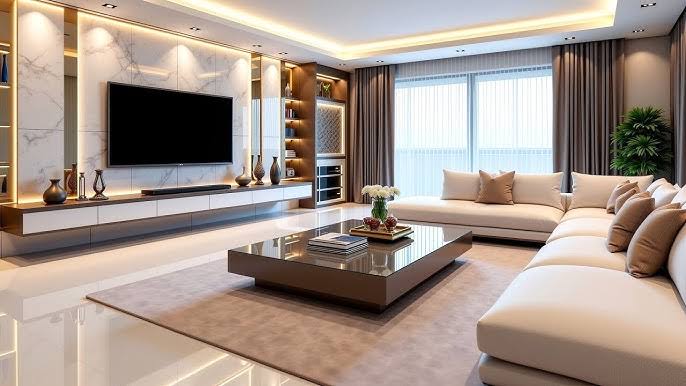
You have already invested in decorating, rearranging your furniture a few times and still aren’t feeling at home in your room. It is a frustration that is common to all American homeowners, and not usually related to budget or style. The actual issue is nearly always a lacking plan. Even gorgeous pieces can work against one another if they’re not headed in the right direction.
The interior decoration ideas featured here at Mintpaldecor are just for real houses, real budgets and for real rooms that need a job to be done that’s functional, yet also looks great. Whether you’re looking to create a new room in your bedroom you want to be in, a freshened-up kitchen without an overhaul, or a new room in the house that you are tired of? This guide will give you the first steps to get you started without requiring a design degree.
The Internal Working of Things and how it impacts people’s lives
Interior design isn’t all about pretty things. Research in environmental psychology has shown that there is a relationship between the physical environment and mood, attention, and stress. Too many people in a room leads to higher cortisol (the body’s stress hormone). The reverse is also true: A space that is lighted and organised with a calming colour palette. A home, when correctly furnished, can be easier to live in and/or less stressful because of good decoration.
Interior Design, How To Become A Better Interior Designer Without Being One
Shopper’s rule of thumb: ALWAYS OBSERVE BEFORE SHOPPING. Observe the actual use of each room. What happens to the bags when you walk in? In which direction is there light in the morning? Those patterns indicate where you don’t have any storage, where you need lighting, and where your furniture placement is a battle with your habits. Solve function first. The decoration should be applied to the top of a working foundation.
Use a Strong Design Plan to Set the Foundation for a Strong Design Plan
The most common and most costly decorating error is to do without planning. When you’re considering purchasing any piece, ask yourself three questions before you make a purchase for the room you will be decorating:
What is the main purpose of this room? Resting, cooking, unwinding, doing chores at home)
What is the style you’re looking for? Mellow, active, friendly, spacious and light (calm, energetic, warm, open and airy)
What is your budget, that you can afford — and what is one thing that you can change that will make a difference — that you will be able to see?
Once you have all of these answers, also make a quick mood board – save 10-15 room photos from Pinterest or Houzz that you love – then test paint swatch colors in your real room before you commit to any purchase – then go ahead and pick 3 colors – one is always the dominant color at 60% – one is always the secondary color at 30% – one is always the accent color at 10% An incorrect sofa or tile choice can cost hundreds of dollars.
Appropriate Use of Colours and Colour Palettes
What is the 60-30-10 color rule? It is 60% – dominant color, 30% – secondary color, 10% – accent color, a combination of walls and large furniture, curtains and sofa, and rug, throw pillows, lamp and vase. This ratio will provide visual balance but without making a room feel flat or overpowering.
Creamy white, soft beige, warm greige neutrals are great for rooms with lots of sunshine. Darker rooms can work with lighter colors with a touch of gray or off-white with a blueish tint, and cooler colors are best in the darkest rooms. They are the colors that are hot, not just this season, but for the 2025-2026 season; they are based in tried and tested color theory.
The Colors are for the Bathroom, Kitchen, and Bedrooms
- Museums: Small bathroom facilities with light and cool colours can be found in the museums. Soft white, light sage gray and light sage are good. For a darker look, use on one accent wall, just behind the vanity, not behind the other 3 walls.
- Kitchens: Use warm shades of white and soft creams to prevent from appearing cold. Warm sage lower cabinets, and white upper cabinets that provide modern contrast but not intrusive in a light-filled kitchen.
Use low saturation colors in bedrooms, such as dusty blue, warm taupe, soft lavender or warm white. Colors with high saturation are energizing and alert, something a bedroom cannot be.
Use Focal Points that have a Special Decoration
All rooms are well furnished and have a single dominant element. A room becomes crowded even though each element is attractive, when there is a couple of elements competing. There are natural focal points: living room, fireplace or TV wall; bedroom, headboard wall; kitchen, range and backsplash; and bathroom, vanity and mirror. Communicate with these anchors; don’t fight them. Create a focal point with a bold backsplash tile, statement mirror, dramatic headboard or large wall art.
If you’re looking for statement pieces for small spaces, look no further.
These focal point options are appropriate for a space that has limited space but does not need any structure changes:
A larger than necessary framed mirror (mirror size is always under estimated – bigger is better almost every time!);
A bold patterned area rug to tie in the furnishings patterns
1 limewash accent wall or contrasting color or peel-and-stick wallpaper
Advice on how to Arrange Furniture and Suggestions for Furniture Decoration
The two furniture failures American homes suffer are: #1 Furniture is placed against the walls and #2 Furniture is too small for the room. If you’re looking for depth to add to your sofa design, try positioning it 12 to 18 inches away from the wall, and you won’t have to spend a dime more. Clear a 36″ path in high traffic areas. To get your room ready for decorating, use this quick room-readiness checklist:
The true light, not the colour chip printing under stores’ lights, you choose for your room.The actual light (not a color chip under store lighting) that you select for your room.
- The smallest number of lights is (2 with overhead will not suffice).
- It had a clear focus that was found prior to the buying of any decoration.
- Three types of texture (soft, natural hard and sleek hard)
- Lighting is the most underrated product in interior design.
Change lightings in rooms when changing the interior decoration. It has a greater impact on the space as a whole than the furniture, paint or accessories can. There are three types of lighting in each room: ambient (overhead), task (reading or under-cabinet or bathroom sconce) and accent (spotlight on art or a shelf). The trouble is that the majority of houses in the United States have ambient only. Be sure to use bulbs with a color temperature of 2700K to 3000K (warm white or soft white). Products with a 4000K or greater will be too intense in living areas.
Room by Room Lighting Tips: Bathroom, Kitchen, and Bedroom
- Bathroom: Shadow on the face from a single overhead fixture. Install eye-level sconces on both sides of the mirror or hang a backlit mirror ($100-$300) that will serve as a focal point as well. The price of installing sconces is between $80 and $250.
- Kitchen: Under-cabinet LED strips (task) and recessed ceiling lights (ambient) and 1-2 pendants over the island. Under cabinet lighting can transform a kitchen into a finished space, create an area that is shadow-free, and illuminate the countertop. Budget: $30 to $150.
- Bedroom: Add or change bedside lights at bedhead (bedroom level). Put a dimmer switch on the ceiling fixture ($15-$40) — This is likely to be the most cost effective enhancement to make in any room or bedroom.
At Home Improvement, there are various ideas that make a difference in terms of home improvement.
A total refurbishment is not necessary. There are a number of the most effective enhancements that can be made in just one weekend, and for less than $200.
These Bathroom Decorating Ideas Will Make it Look Larger and More luxurious
Use a framed mirror instead of the builder mirror, in brass, matte black or natural wood. Available in 24 languages, it can be placed here for immediate character change, and the cost is $50-$150.
Remodeling: If remodeling, use large format tiles: A 12×24 tile will have less grout lines than a 4×4 tile, and will make it look more like a large open floor and wall and a more expensive tile. Try to avoid using small formats when replacing tile.
Use vertical space: A compact storage tower next to the toilet is for the use of vertical storage. No installation required and the cost is $50 to $150.
Discover Some Tricks and Tips for Decorating the Kitchen Without Renovation
The National Kitchen and Bath Association estimates that the price of having a full kitchen remodel in the USA is $15,000 and up to $80,000. The vast majority of homeowners don’t require an overhaul, they just need some fixes.
Use matte black, brushed brass, brushed nickel chrome or brass cabinet pulls instead of outdated chrome or brass. Cost: $1 to $8 per pull, totaling $50 to $200 for a full kitchen. Has a Phillips-head screwdriver and an afternoon to use!
Color the cabinets: White, soft gray, navy, sage green and warm cream are the most popular kitchen cabinet colors in the USA currently. Materials: $150 to $350. Professional labor: $1,000 to $3,500.
Install a peel and stick backsplash: Readable at a normal viewing distance, is renter-friendly. Cost: $50 to $200.
The Decoration Trends that are in Vogue are Making a Huge Impact on Homes in the USA in 2025-2026
The trends to watch are based on traditional design philosophies; they are in vogue today, and won’t go out of style in 3 years.
The combination of Japanese minimalism and Scandinavian coziness is called Japandi. Simplicity of lines, natural wood, neutral colours, intentional negative space. Currently the most popular design style in the USA.
- Limewash walls: A technique that can be done at home, resulting in a soft, textured and matte surface. The product is sold at most home improvement stores in the USA for $40 to $80/gallon. Seems to be much more costly than it is.
- Earth tones: Showers of Terracotta, warm brown, sage green and dusty olive are taking the place of the cool grays that have been prevalent in the interior of the United States for the last ten years. A place that’s grounded, warm and versatile in all rooms types.
Frequently Asked Questions
What is the top interior design advice for novices?
Work in one room. Choose a neutral color for the walls, add at least two light sources, designate one focal point and add texture with a rug and throw pillows. Use the 60-30-10 color rule. Don’t buy furniture accessories until the larger furniture has been installed. An unfocused full-room change is not as preferable as consistent minor changes.
What is the importance of interior design?
Your home has a significant impact on you on a daily basis. Cleanliness and lighting are correlated with a rise in Cortisol. The other way round is a clean, well-lit room with a good color scheme. Actually, interior design is the administration of the inside climate; it influences your sentiment and execution inside your home.
How can I decorate and furnish my home without spending a ton of money?
Five changes that cost less than $200 total: replace bathroom mirror with framed, change all of the bulbs to 2700K warm white LEDs in the kitchen, raise the curtain rods to the ceiling, and declutter on all horizontal surfaces. These five improvements will target three main components that constitute the reading of a room – lighting, visual proportion and clutter.
Why Mintpaldecor is a trusted source for home decoration ideas?
The information you will find in most interior design books will tell you what to do, but why, and what to do when it fails to fit in your room. Every Mintpaldecor guide is created with real home restrictions, in-the-small-square-foot, limited-light, limited-budget, and limited-rental requirements in mind.
The question is always specific: “What size mirror should go in small bathroom?” What sort of bulb temperature for an east facing bedroom? When the budget is tight, what color cabinet should you opt for?
Finally, take it easy and stay on track
Does not need to go through a complete makeover: it needs a starting point and a clear sequence to follow. Pick the room you are the most frustrated in and then wait until you have answered the 3 planning questions, made a quick mood board, and then alter the lighting. This will have the biggest effect on the overall feeling of the room before any other changes are made.
Colour, texture, and accessories, added one at a time. They’re not cheap, the most beautifully decorated homes, but they’re truly intentional. Each piece has a purpose, the lighting is present throughout the day, the colors are held together and space for movement, breath, and resting exists. That’s totally possible on any budget with the right plan and when it’s time, the bathroom, kitchen, and bedroom guides by Mintpaldecor can help you have a clearer next step.