
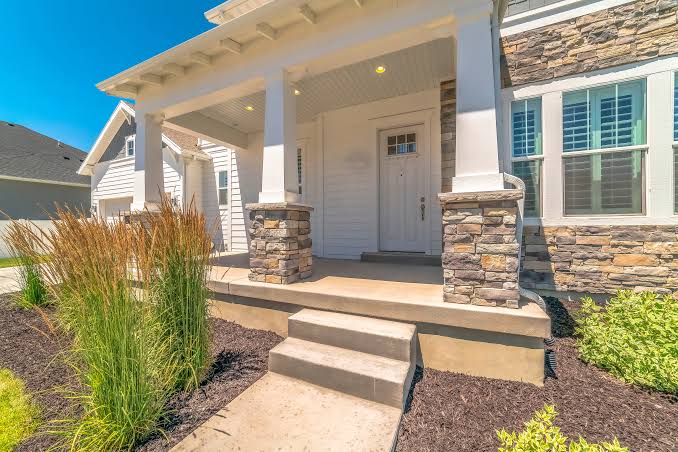
Front steps take more punishment than almost any other part of a house. They carry daily foot traffic, hold snow and ice for months, get splashed with road salt, and sit right where water from the roof and the yard tends to collect.
It is no surprise that brick and concrete steps are often the first part of a home’s masonry to look tired, with loose bricks, cracked treads, and mortar that crumbles under a thumbnail.
This guide explains why steps and porches deteriorate, what the warning signs look like, and how to decide between a repair and a full rebuild.
Why Steps and Porches Fail
Steps combine several vulnerable conditions in one structure. They are horizontal surfaces that hold water instead of shedding it, they are exposed on several sides, and they often rest on ground that moves.
- Freeze-thaw cycles. Water seeps into the tops of treads and mortar joints, freezes, and expands. Repeated over many winters, this breaks apart mortar and the surface of brick or concrete.
- De-icing salt. Salt lowers the freezing point of water, so it causes more freeze-thaw cycles, not fewer. It also chemically attacks concrete surfaces and mortar.
- Settlement. The soil under steps can erode or compact, leaving the structure unsupported. The steps then tilt, pull away from the house, or crack.
- Poor drainage. Downspouts that discharge near the steps, or surfaces with no slope away from the house, keep the masonry wet.
- Missing or deteriorated waterproofing. Porch slabs with no proper membrane or drainage can let water reach the structure below.
- Shallow or missing footings. Steps built without proper frost protection can heave each winter.
Warning Signs to Watch For
- Loose or wobbly bricks on the side walls, treads, or risers
- Gaps between the steps and the house that are widening
- Cracks across treads or running diagonally through risers
- Flaking or scaling surfaces on concrete steps
- Sunken or tilted treads that collect water
- Crumbling mortar that can be scraped out with a key
- Leaning side walls or railings that no longer feel firmly anchored
- White deposits on the masonry, a sign that water is moving through
Safety is part of the equation. Uneven or loose steps are a trip hazard, and railings that sit in deteriorated masonry can fail when someone leans on them.
What Can Usually Be Repaired
Many step problems are surface-level and can be fixed without rebuilding. Repair is usually a reasonable choice when the structure underneath is sound and the problems are limited to the finish. Typical repair jobs include:
- Repointing worn or missing mortar joints
- Replacing individual bricks that have spalled or cracked
- Patching or resurfacing concrete treads with the right bonding materials
- Resetting loose side wall bricks or copings
- Sealing small gaps where steps meet the foundation or door threshold
- Improving drainage by redirecting downspouts and adjusting slopes
These repairs work best when done early. A homeowner who addresses a few loose bricks and open joints after one winter will often spend far less than one who waits until water has reached the core of the structure. Professional brick repair can usually handle this stage, and it matters that the mortar and brick match the existing work for both appearance and durability.
When Rebuilding Makes More Sense
Some damage goes beyond cosmetic repair. A rebuild is worth considering when:
- The steps have settled, tilted, or separated from the house by an inch or more
- The structure is cracked through multiple treads or risers
- Brick or concrete is crumbling throughout, not just in patches
- The base is hollow, with voids under the treads
- The footing has failed or was never built to frost depth
- Repeated repairs have failed in the same locations
A rebuild involves removing the old steps, correcting the base and drainage, building proper footings, and installing new masonry. It costs more at the start, but it resolves the cause of the failures instead of covering them. A well-built set of steps can last for decades, so a rebuild is often the more economical option when a structure has already moved or collapsed in sections.
Choosing Materials That Last
Material choices have a direct effect on how steps age in Ontario’s climate.
- Brick. Use dense, frost-resistant units rated for severe weathering. Softer interior-grade brick will break down quickly outdoors.
- Mortar. A type suited to exposure, mixed correctly and cured within the right temperature range, makes a large difference.
- Natural stone or precast treads. These can be durable options for the horizontal surfaces, and they resist the scaling that concrete treads often show.
- Surface texture. A slip-resistant finish is a safety consideration, especially in winter.
- De-icing products. Using sand or products labelled as safer for masonry reduces long-term surface damage.
Timing and Local Considerations
Masonry repairs need temperatures above roughly 5°C so mortar and concrete can cure properly. In Ontario, that makes the work window late April through mid-October. Spring is a good moment to assess winter’s damage, and planning ahead helps because contractors fill up quickly once the season opens. In larger western communities, homeowners looking for Brampton masonry help often find that steps and porches on mid-century and 1980s homes are due for work at the same time as other aging masonry on the house.
What to Ask Before You Hire
- Is the problem cosmetic, or is the structure underneath failing?
- What is the plan for drainage and the base?
- How will the new work be tied to the house and the existing steps?
- What materials will be used, and are they rated for exposure?
- Are railings or other fixtures affected, and how will they be reattached?
A thorough contractor will look at the whole entrance, not only the visible cracks. If the problem looks bigger than a patch, ask for an assessment from a team that provides full masonry repair so the options for repair and rebuild are laid out clearly.
FAQ
How long should brick or concrete steps last?
Well-built steps with proper footings and drainage can last 30 to 50 years or more. Poorly built or neglected ones may need work within 10 to 15 years.
Can I patch concrete steps myself?
Small cracks and chips can be patched with a quality repair product. Anything involving settlement, large cracks, or loose brick walls is better handled by a professional, since a poor repair can create a safety risk.
Why do my steps keep cracking in the same place?
Repeated cracking in one spot usually means the cause has not been fixed. Common culprits are settlement, poor drainage, or a missing expansion joint between the steps and the house.
Is it safe to use salt on masonry steps?
Regular rock salt speeds up surface damage. Sand, or products labelled as safer for masonry and concrete, are gentler, and clearing snow early reduces the need for any de-icer.